Introduction
In today’s digital-first business environment, a website is much more than an online brochure. It is often the first place potential customers go to learn about a company, evaluate its credibility, explore its services, and decide whether to make contact.
For businesses in 2026, having a professional website can provide a strong foundation for marketing, customer communication, branding, and long-term growth.
1. Build Trust and Credibility
Customers want to know that a business is legitimate and professional before they spend money.
A well-designed website can communicate credibility through:
- Professional design
- Clear company information
- Detailed service pages
- Customer testimonials
- Portfolio or case studies
- Contact information
- Consistent branding
A poorly designed or outdated website, on the other hand, can make potential customers question the quality of a business.
2. Reach Customers 24/7
Unlike a physical office, a website can be available around the clock.
Potential customers can visit your website at any time to:
- Learn about your services
- View your products
- Read your blog
- Submit an inquiry
- Request a quote
- Find your contact information
This makes a website an important part of a modern business’s digital infrastructure.
3. Generate More Customers
A website should not simply look attractive—it should encourage visitors to take action.
Effective websites use clear calls to action such as:
Get a Quote →
Book a Consultation →
Contact Us →
Start Your Project →
When design, content, navigation, and calls to action work together, your website can become an important lead-generation channel.

4. Improve Your Search Engine Visibility
A professional website also gives your business a foundation for SEO.
Search engines need to understand what your business does, which services you offer, and which topics your website covers.
Important SEO elements include:
- Keyword-focused content
- Descriptive page titles
- Useful service pages
- Internal linking
- Mobile-friendly design
- Fast-loading pages
- Clear website structure
- Helpful blog content
Google’s current guidance emphasizes creating useful, reliable, people-first content and maintaining strong technical foundations for search visibility.
5. Support Your Digital Marketing
Your website should be the central destination for your digital marketing efforts.
For example:
Facebook/Instagram Ad → Landing Page → Website → Lead Form → Customer
Google Search → Service Page → Contact → Customer
YouTube Video → Website → Consultation → Customer
This is why website development and digital marketing often work best when planned together.
6. Make Your Business Mobile-Friendly
A large portion of online activity happens through smartphones.
A modern website should therefore work smoothly across:
- Smartphones
- Tablets
- Laptops
- Desktop computers
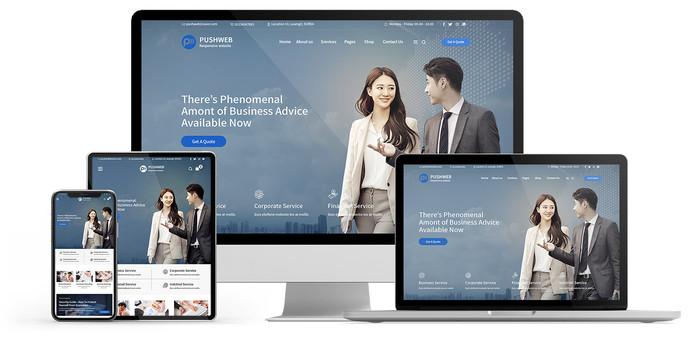
A responsive design automatically adapts the website layout to different screen sizes, making it easier for visitors to navigate and interact with the business.
7. Strengthen Your Brand
Your website is also one of your most important branding assets.
Your:
- Logo
- Colors
- Typography
- Images
- Messaging
- Visual style
- Brand story
can all work together to create a consistent identity.
A strong website can make a small business look more established and professional.
8. Connect Your Website With Other Business Tools
A modern website can connect with many other digital tools and platforms.
For example:
- Google Analytics
- Search Console
- CRM systems
- Email marketing
- Social media
- Payment systems
- Booking systems
- E-commerce platforms
- Customer support tools
This allows your website to become more than a simple information page—it can become part of your business’s operational system.

What Should a Professional Business Website Include?
A strong business website will usually include:
Essential Pages
- Home
- About Us
- Services
- Portfolio
- Blog
- Contact
Important Features
- Mobile-responsive design
- Fast performance
- SSL/security
- SEO-friendly structure
- Clear calls to action
- Contact forms
- Social media integration
- Analytics
Depending on the business, additional features such as e-commerce, appointment booking, customer portals, or online payments can also be added.
Final Thoughts
A professional website is no longer simply an online presence. It can serve as the digital foundation of a modern business.
From building credibility and attracting customers to supporting SEO, digital marketing, branding, and lead generation, a well-planned website can contribute to multiple areas of business growth.
At AlOsman LLC, website development is part of a broader digital-solutions approach designed to help businesses build their online presence and grow through technology.
Your website should not just tell people about your business—it should help your business grow.