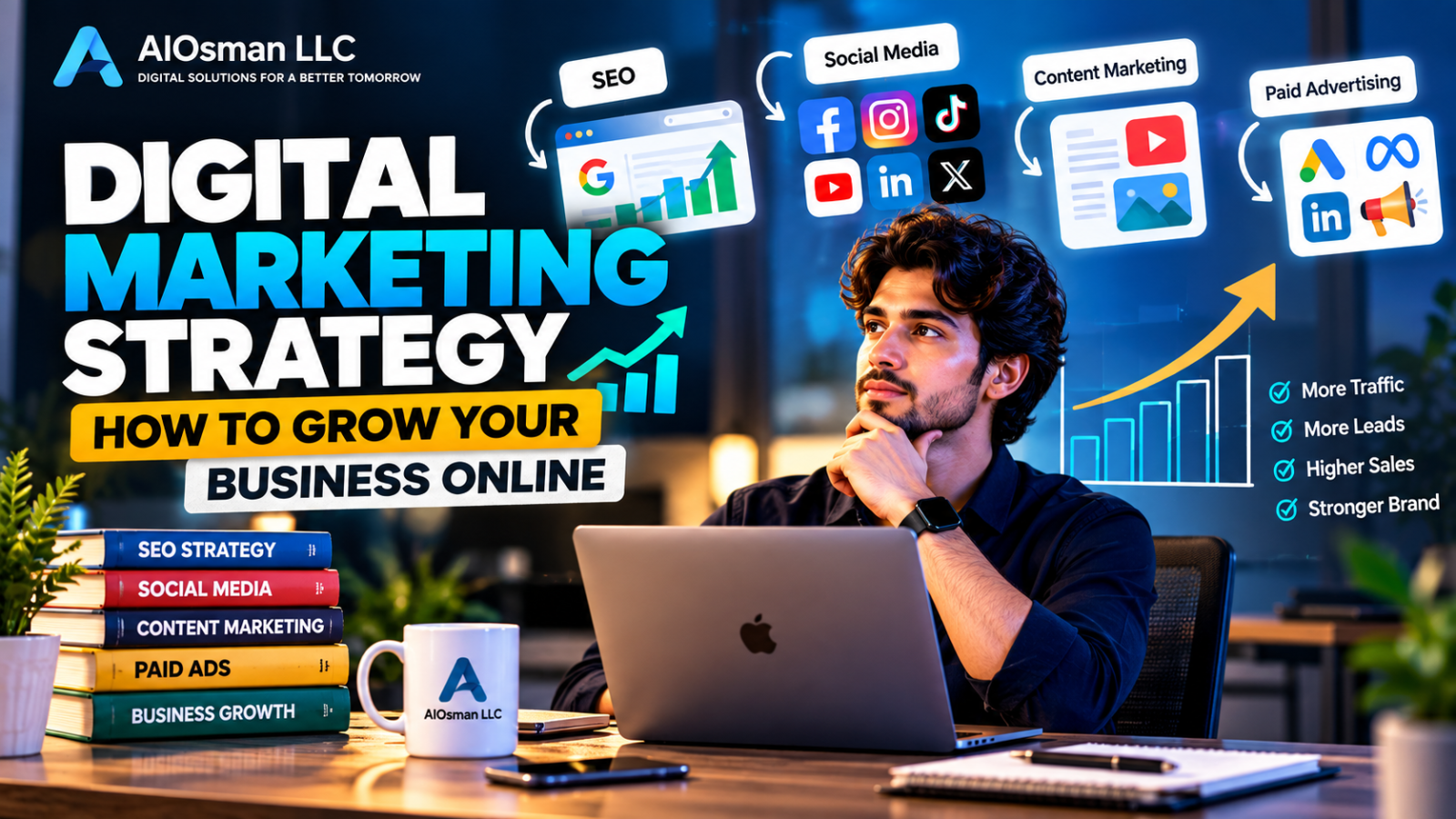
Digital Marketing Strategy: How to Grow Your Business Online
Building a business in today’s digital world requires more than simply having a website. Customers are searching online, comparing businesses, watching videos, reading reviews, and interacting with brands across multiple digital platforms.
A well-planned digital marketing strategy can help businesses reach the right audience, communicate their value, generate leads, and build a stronger online presence.
In this guide, we’ll explore some of the key components of a successful digital marketing strategy.
1. Define Your Target Audience
Before launching a marketing campaign, you need to understand who you are trying to reach.
Consider:
- Who are your ideal customers?
- What problems do they have?
- What products or services do they need?
- Where do they spend time online?
- What influences their purchasing decisions?
Understanding your target audience helps you create more relevant content and marketing campaigns.
2. Build a Professional Website
Your website is often one of the first places potential customers interact with your business.
A professional website should provide:
- Clear information about your business
- Easy navigation
- Mobile-friendly design
- Fast performance
- Clear service descriptions
- Contact options
- Strong calls-to-action
Your website should work as the central hub for your digital marketing activities.
3. Invest in SEO
Search Engine Optimization (SEO) helps your website become more discoverable through search engines.
Important SEO activities include:
- Keyword research
- Optimizing page titles
- Creating useful content
- Improving website structure
- Optimizing images
- Building relevant links
- Improving technical performance
SEO is generally a long-term process. Consistent optimization and useful content can help strengthen your online visibility over time.
4. Use Social Media Marketing
Social media provides businesses with opportunities to communicate directly with their audience.
Depending on your target customers, you may use platforms such as:
- TikTok
- YouTube
- X
Instead of posting randomly, create content around clear goals such as education, brand awareness, engagement, or lead generation.
5. Create Valuable Content
Content marketing can help businesses demonstrate their knowledge and provide useful information to potential customers.
You can create:
- Blog posts
- Videos
- Tutorials
- Case studies
- Infographics
- Social media posts
- Guides
For example, a web development company could publish articles about website security, SEO, website design, and online business growth.
Useful content can attract people who are actively looking for information related to your services.
6. Consider Paid Advertising
Organic marketing can take time. Paid advertising can provide another way to reach specific audiences.
Businesses may use platforms such as:
- Google Ads
- Meta Ads
- LinkedIn Ads
- TikTok Ads
- YouTube Ads
Before spending money on advertising, define your objective, audience, budget, landing page, and measurement strategy.
7. Track Your Results
One of the biggest advantages of digital marketing is the ability to measure performance.
You can monitor metrics such as:
- Website visitors
- Traffic sources
- Leads
- Conversion rates
- Search performance
- Ad performance
- Engagement
Tracking these metrics can help you understand which activities are producing useful results and where improvements may be needed.
8. Keep Improving Your Strategy
Digital marketing isn’t a one-time task.
Customer behavior, platforms, search technology, and competition continue to change. Your strategy should therefore be reviewed regularly.
Test different content, campaigns, landing pages, and messaging, then use the available data to make informed adjustments.
Common Digital Marketing Mistakes
Businesses often make several avoidable mistakes:
Trying to Be Everywhere
You don’t necessarily need every social media platform. Focus on the channels that are relevant to your audience.
Creating Content Without a Goal
Every piece of content should have a purpose—such as educating, building awareness, generating leads, or supporting customers.
Ignoring SEO
A beautiful website may still struggle to attract organic traffic if its content and technical structure are not optimized for search.
Not Tracking Performance
Without measurement, it can be difficult to understand whether your marketing efforts are producing the desired results.
Expecting Immediate Results
Different digital marketing channels produce results at different speeds. SEO, content marketing, social media, and paid advertising each require different approaches.
Final Thoughts
A successful digital marketing strategy combines multiple elements rather than relying on a single channel.
A strong website, useful content, SEO, social media, paid advertising, and performance tracking can work together to create a stronger digital presence.
At AlOsman LLC, we provide digital solutions including web development, app development, digital marketing, SEO, graphic design, and video editing to help businesses build their presence and grow in the digital world.
Ready to grow your business online?
Explore AlOsman LLC’s digital solutions and find the right strategy for your business.
Explore Our Services →